Product introductions
Currently, in power systems, the ground resistance of large grounding grids is mainly measured using the power-frequency high-current three-electrode method. In order to prevent power-frequency interference generated during grid operation and improve measurement accuracy, insulation preventive test regulations specify that the test current for the power-frequency high-current method shall not be less than 30A. As a result, problems such as bulky test equipment, complex test procedures, high labor intensity for test personnel, and long test durations have arisen.
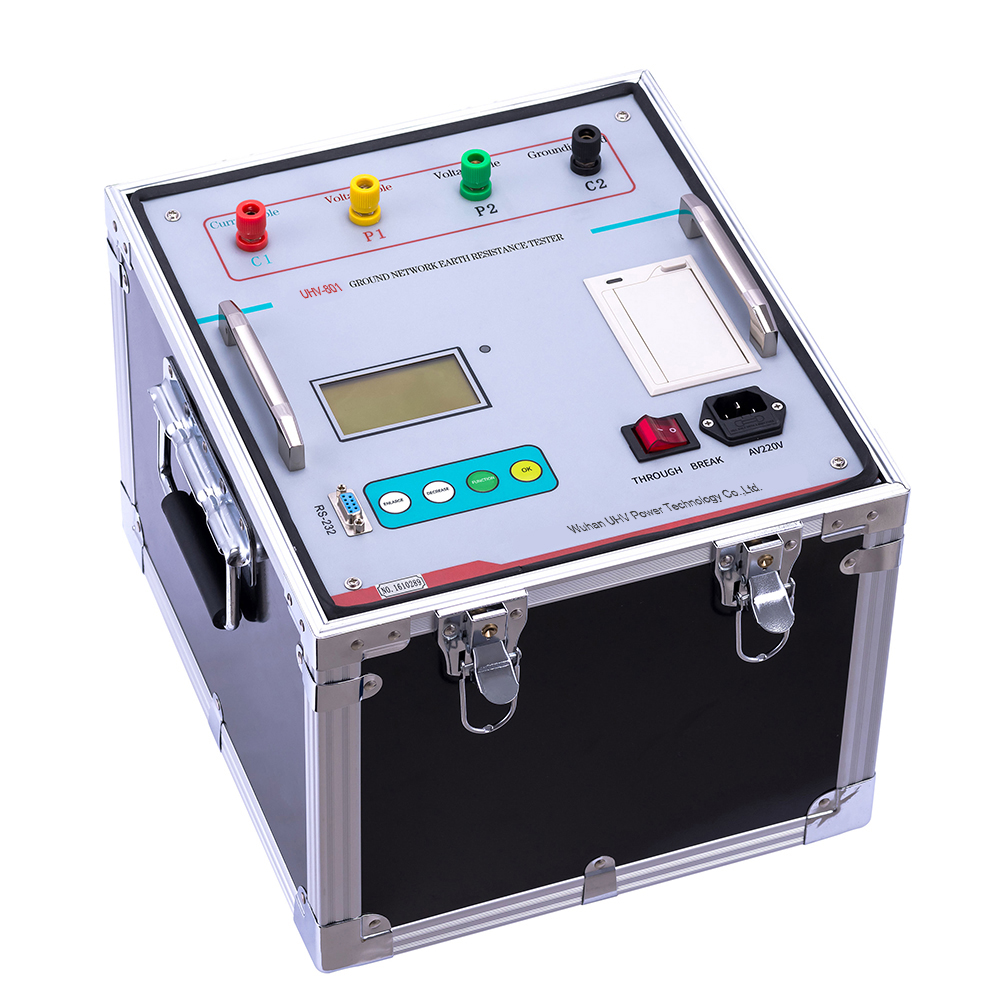
Wuhan UHV Power Technology Co.,Ltd., is a professional manufacturer and supplier of high-voltage power testing equipment in China.The large grounding grid ground resistance tester adopts a new variable-frequency AC power supply and incorporates microprocessor control and signal processing measures, effectively solving the anti-interference issues during testing, simplifying test operations, improving the precision and accuracy of test results, and significantly reducing labor intensity and test costs.
This instrument is suitable for testing power-frequency grounding impedance, contact voltage, step voltage, and other power-frequency characteristic parameters of various grounding devices, as well as soil resistivity. It can be used for substation grounding grids (4Ω), thermal and hydro power plants, microwave stations (10Ω), and lightning rods (10Ω) — a multi-purpose instrument.
The instrument uses frequency conversion anti-interference technology, enabling accurate measurement of data at 50Hz power frequency even in strong interference environments. The maximum test current is 3A, which does not cause excessive potential rise on the grounding device during testing. At the same time, it has extremely strong anti-interference capability, allowing measurements to be performed without power interruption.
 | 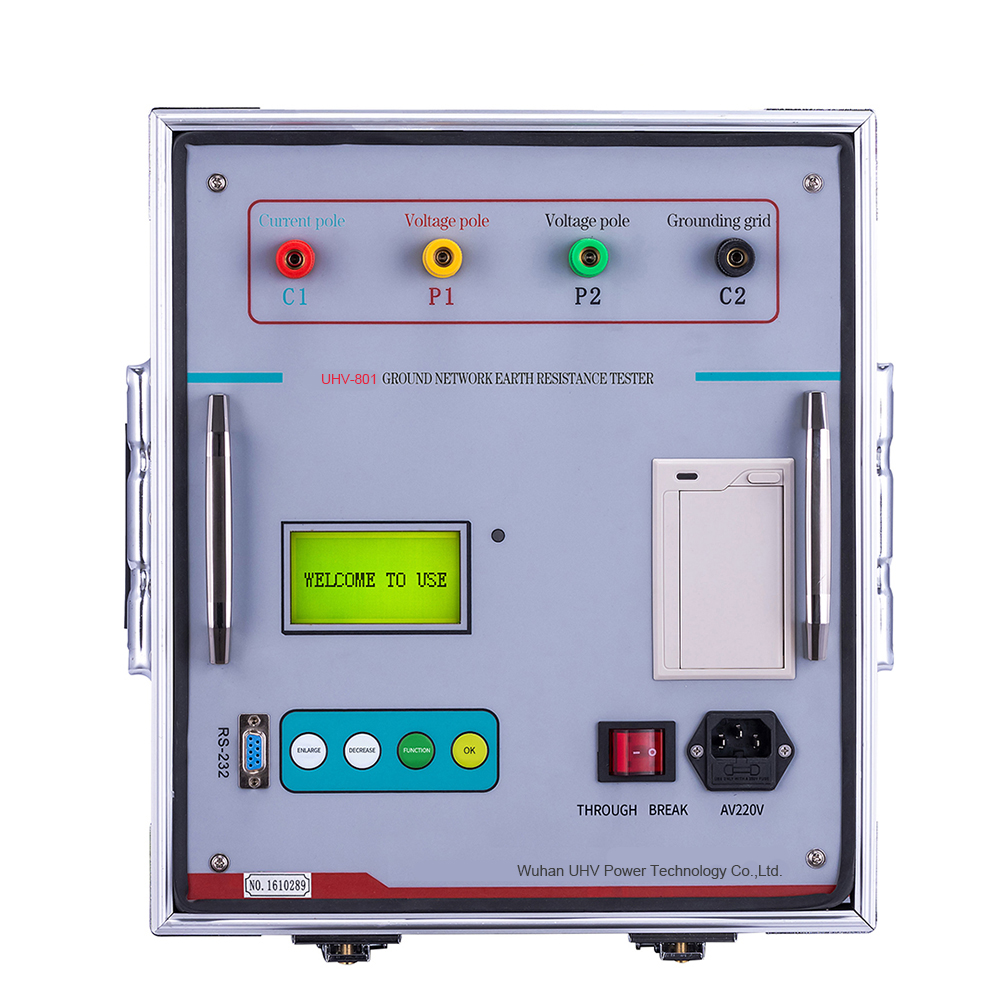 |
Product functions
1. Large grounding grid ground resistance testing
Used for measuring the ground resistance of large grounding grids in substations, power plants, and other facilities, accurately evaluating the grounding performance of the grounding system, and providing reliable data for grounding system acceptance and operation and maintenance.
2. Grounding grid impedance testing
Used for measuring the overall impedance characteristics of large grounding grids, helping to assess the actual grounding capability of the grid and promptly identifying potential issues in the grounding system.
3. Step voltage testing
Used for detecting the step voltage that may occur on the ground surface under grounding fault conditions, evaluating the protection capability of the grounding system for personnel safety.
4. Touch voltage testing
Used for measuring the touch voltage that may occur between equipment and ground, assisting in assessing the safety performance of the grounding system and reducing the risk of electric shock to personnel.
5. Current electrode and voltage electrode impedance testing
Can separately measure the impedance parameters of the current electrode and voltage electrode, helping to determine the operating condition of the test loop and auxiliary electrodes, and improving the reliability of ground test results.
6. Variable-frequency anti-interference testing
Uses 45Hz/55Hz variable-frequency testing technology to effectively avoid 50Hz power frequency interference, combined with digital filtering technology, improving test stability in strong electromagnetic interference environments such as substations.
7. High-precision measurement for low-resistance grounding systems
Measurement range covers 0 to 200Ω with a resolution of up to 0.001Ω, suitable for precision measurement of low-resistance grounding systems such as large grounding grids.
8. Multiple test current outputs
Provides 1A to 5A multiple test current levels, allowing selection of appropriate output current based on different grounding grids and on-site test conditions, improving field testing flexibility.
Parâmetros do produto
faixa de medição | 0~200Ω(incluindo a impedância atual da pilha) |
resolução | 0,001Ω |
erro de medição | ±(leituras×1%+0,005Ω) |
tensão máxima de saída | CA 400 V (45 Hz, 55 Hz, frequência dupla, onda senoidal) |
corrente máxima de saída | AC 5A (45 Hz, 55 Hz, frequência dupla, onda senoidal) |
Engrenagem de saída | 5 / 4,5/4/3,5/3/2,5/2/1,5/1a, a cada 0,5A, 9 marchas no total |
capacidade anti-interferência | frequência anti-energia 50Hz tensão 10V |
requisitos de linha de medição | Área da seção do núcleo de cobre do fio de corrente ≥ 1,5 mm2 |
Área seccional do núcleo de cobre da linha de tensão ≥ 1,0 mm2 | |
fonte de energia | AC220V±10%,50Hz |
Dimensão externa | 295×340×310mm3 |
peso do instrumento | 30kg |
Nickname: Grounding Grid Resistance Tester; Grounding Resistance Meter
Características
1. A frequência de potência medida tem boa equivalência. A forma de onda da corrente de teste é uma onda senoidal com uma diferença de frequência de apenas 5 Hz em relação à frequência de alimentação. Duas frequências de 45 Hz e 55 Hz são usadas para medição.
2. Forte capacidade anti-interferência. O testador de resistência de aterramento de rede terrestre em grande escala adota diferentes métodos de frequência para medição, combinados com moderna tecnologia de filtragem de software e hardware, o que faz com que o instrumento tenha alto desempenho anti-interferência e dados de teste estáveis e confiáveis.
3. High precision. The basic error is only 0.005Ω, which can be used to measure the ground network with a small grounding impedance.
4. Poderoso. Ele pode medir pilha de corrente, pilha de tensão, resistência de aterramento, tensão de passo e tensão de contato.
5. Operação simples. Todas as operações do menu chinês exibem diretamente os resultados da medição.
6. O trabalho de fiação é pequeno e nenhum fio de corrente grande é necessário.
Application Scenarios
Substation grounding grid testing
Used for measuring parameters such as ground resistance and grounding impedance of large substation grounding grids, evaluating the operating status and safety performance of the grounding system.
Power plant grounding system testing
Used for grounding performance testing of large grounding grids in power plants, helping to determine whether the grounding system meets requirements for safe operation.
Transmission and substation project completion acceptance
Used for acceptance testing of grounding grids in newly built, expanded, or retrofitted substations and power projects, verifying that ground resistance and related parameters meet design and specification requirements.
Power equipment grounding performance testing
Used for performance inspection of grounding systems for electrical equipment, transformers, switchgear, and other devices, promptly identifying issues such as poor grounding.
Periodic grounding grid maintenance
Used for routine operation, maintenance, and periodic testing of power facilities. Through testing of ground resistance, touch voltage, and step voltage, the long-term operating status of the grounding system can be monitored.
Grounding system safety assessment
By testing parameters such as touch voltage and step voltage, evaluates the safety protection capability of the grounding system for personnel and equipment during fault conditions.
Power testing and on-site inspection
Suitable for power testing institutions, engineering construction units, and operation and maintenance organizations for on-site testing and fault diagnosis of large grounding grids.
Frequently Asked Questions
Q: What is the large grounding grid ground resistance tester mainly used for testing?
A: It is mainly used for ground resistance and grounding impedance testing of large grounding grids, while also supporting step voltage, touch voltage, and current electrode / voltage electrode related parameter testing. It is suitable for testing large grounding systems such as substations and power plants.
Q: Can it test step voltage and touch voltage?
A: Yes. The device supports step voltage and touch voltage testing, which can be used for grounding system safety performance assessment.
Q: Is on-site wiring complicated?
A: The device is designed with convenience for large grounding grid field testing in mind. It does not require high-current test leads, reducing on-site wiring workload and improving testing efficiency.
Q: Which industries is the large grounding grid ground resistance tester suitable for?
A: It is mainly used in the electric power industry, substations, power plants, transmission and substation projects, power construction, and power operation and maintenance. It is also suitable for grounding system testing organizations and power testing institutions.