In the maintenance of power systems and industrial equipment, we often focus on high currents and high voltages, but often overlook the most fundamental and easily overlooked "connection points". The "health" of these connection points is directly related to the stable operation of the entire system. Today we will talk about how to accurately evaluate these critical connections through contact resistance measurement.
What is contact resistance?
Simply put, contact resistance is the obstruction that occurs when current passes through the contact surface of two conductors (such as switch contacts, cable connectors, circuit breaker contacts, etc.). In an ideal state, we hope that the smaller the resistance, the better, almost zero. However, in reality, due to insufficient contact pressure, surface oxidation, and dirt adhesion, the contact resistance will increase.
Why is contact resistance important?
Heating and energy consumption: An increase in contact resistance means that at the same current, more electrical energy will be converted into thermal energy, causing equipment heating and energy loss, which will accelerate equipment aging in the long run.
Contact damage: The heat generated by excessive contact resistance may cause the contact to melt or burn, affecting the normal opening and closing function of the switch, and even causing safety accidents.
System instability: Poor contact can cause local voltage drops, affecting the normal operation of equipment and even leading to overall system instability.
What are the factors that affect contact resistance?
To measure accurately, it is necessary to understand the influencing factors:
Contact pressure: This is the most direct factor. The greater the pressure, the larger the contact area, and the smaller the resistance.
Surface condition: Oxidation layer, oil stains, dust, etc. can all hinder the smooth passage of current.
Contact area: The larger the contact area, the more paths the current can pass through, and the lower the resistance.
Conductor material: The conductivity of different materials varies.
Environmental factors such as temperature and humidity can also affect contact resistance.
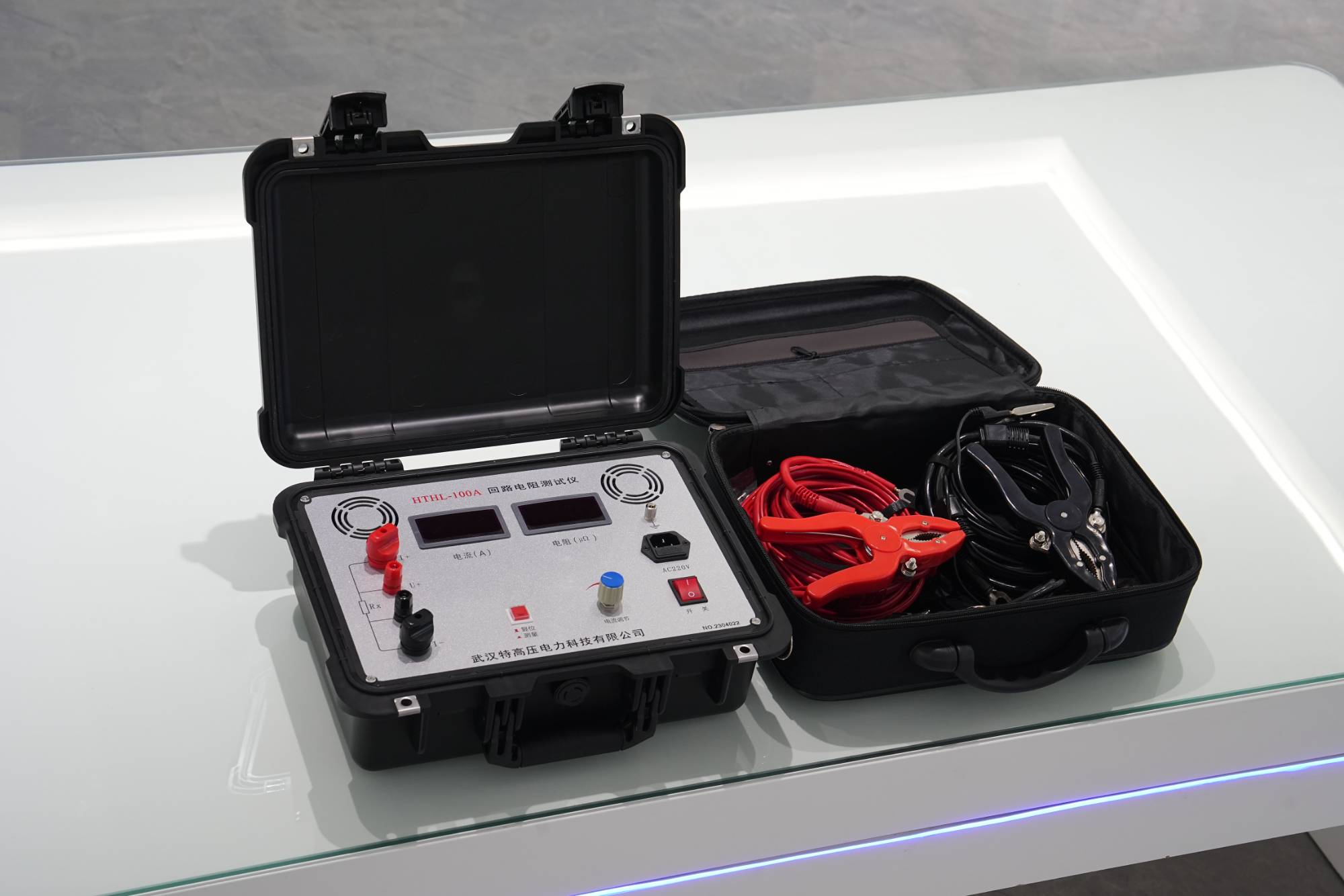
A Tool for Measuring Contact Resistance - Contact Resistance Measuring Instrument
In order to accurately evaluate the "health" of the connection, we need to use professional tools such as contact resistance measuring instruments. This type of instrument determines the quality of the connection point by accurately measuring small resistance values.
How to better measure contact resistance?
Choose the appropriate instrument: Ensure that the accuracy and range of the measuring instrument meet the requirements of the object being measured.
Maintain surface cleanliness: Before measurement, clean the contact surface appropriately to remove obvious dirt and oxide layers.
Apply appropriate pressure: Ensure good contact between the measuring probe and the measured point, and refer to the equipment manual if necessary.
Repeated measurement: Measure at different locations and take the average to obtain more reliable results.
Reference standard: Compare the measurement results with relevant industry standards or equipment requirements to determine if they are qualified.
Wuhan UHV Power Technology Co., Ltd. has rich experience in the research and production of contact resistance measuring instruments. Its products are known for high precision and strong stability, and can provide reliable measurement solutions for the power and industrial fields. For example, their contact resistance tester can accurately measure the small resistance of different device contacts, helping users detect potential problems in a timely manner.
What devices are associated with contact resistance measurement?
High voltage switchgear: such as the contacts of circuit breakers and isolating switches.
Transformer: lead connectors, tap changer contacts.
Busbar connection: the connection point of various busbars.
Cable connectors: terminal heads, intermediate connectors.
Distribution panel and control cabinet: various wiring terminals inside.
By measuring the contact resistance of these key parts, we can promptly identify potential fault points and avoid accidents caused by poor contact.
FAQ
Q1: What is the measurement principle of the contact resistance measuring instrument? A1: The Kelvin method is usually used for measurement, which can eliminate the influence of lead resistance on the measurement results and ensure the accuracy of the measurement.
Q2: What kind of contact resistance value is considered unqualified? A2: It depends on the specific equipment type and industry standards. There is usually a clear reference value, beyond which a hidden danger is considered.
Q3: Can the contact resistance measuring instrument only measure DC resistance? A3: Most contact resistance measuring instruments measure DC resistance because DC resistance can more directly reflect the Ohmic characteristics of a conductor.
Q4: How to determine the frequency of measuring contact resistance? A4: It is recommended to determine based on the importance of the equipment, the operating environment, and the manufacturer's maintenance guidelines. Generally speaking, regular maintenance measurements are necessary.
Q5: What are the characteristics of the contact resistance measuring instrument of Wuhan UHV Power Technology Co., Ltd? A5: Wuhan UHV Power Technology Co., Ltd.'s products usually have the characteristics of high precision, easy operation, good safety, and fast measurement speed, and also provide related equipment in the field of relay protection testing.