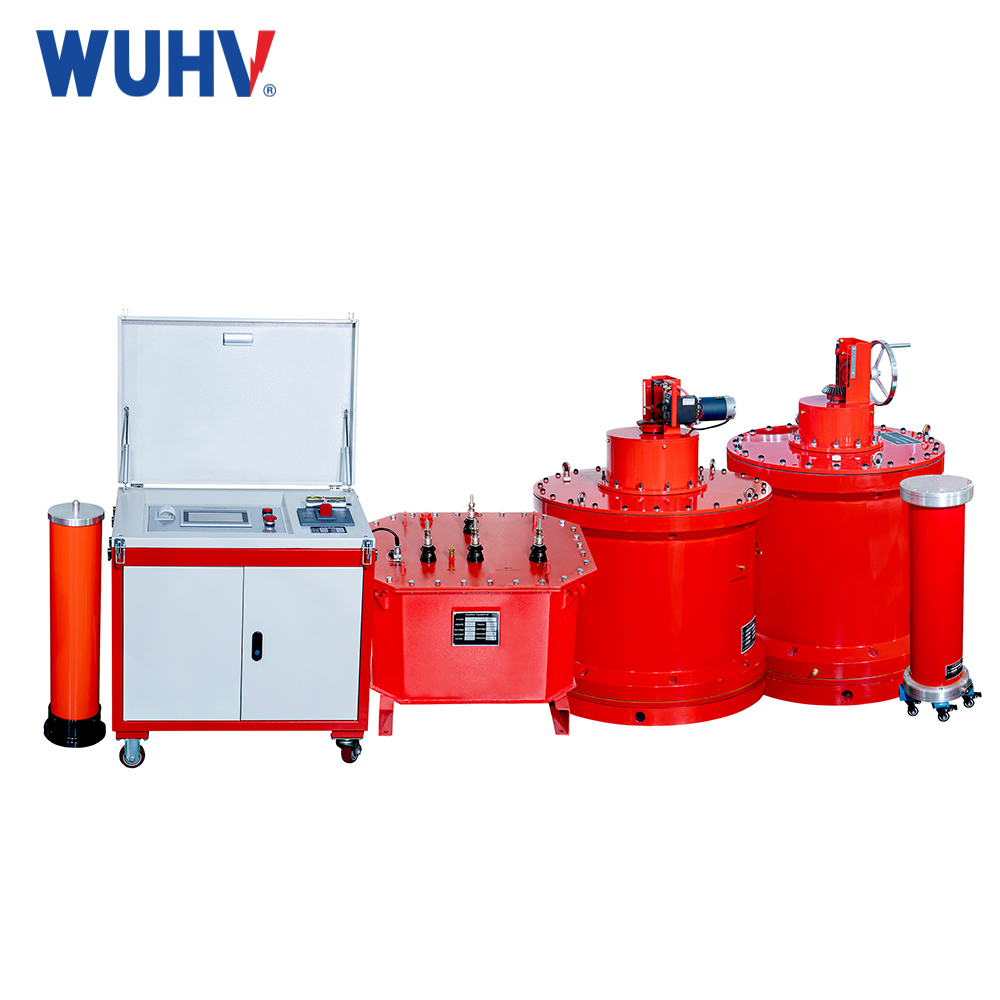
In the factory test of transformers, the core performance indicators of the variable frequency series resonance test device directly determine the test efficiency, equipment cost, and safety - the quality factor Q value. For the technology selection and procurement decision-making of transformer manufacturing enterprises, a deep understanding of the significance of Q value is a key step in ensuring that the testing equipment accurately matches the production needs.
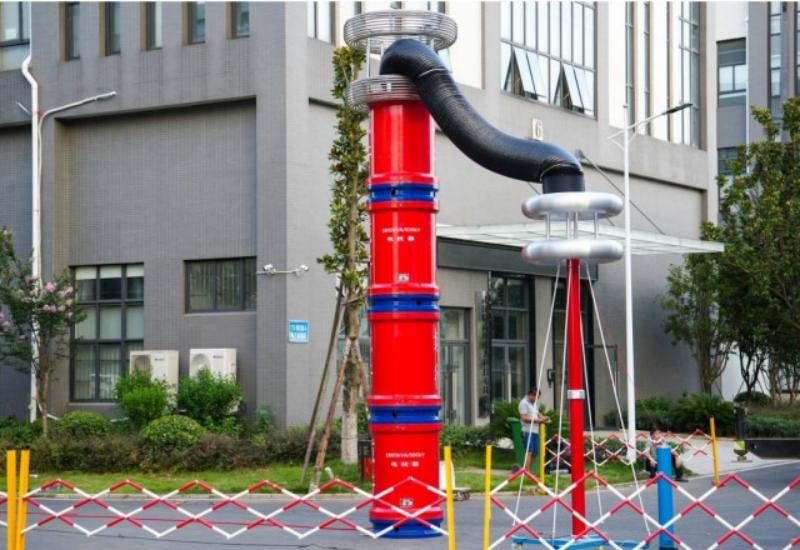
What is the quality factor Q value?
The quality factor Q value is the core parameter for measuring the performance of a series resonant circuit. In a series circuit composed of resistors, inductors, and capacitors, when resonance occurs in the circuit, the test voltage obtained at both ends of the test sample (transformer winding) is Q times the output voltage of the excitation transformer's high voltage end. Simply put, Q value is the "voltage amplification factor" of the system.
The higher the Q value, the smaller the energy loss of the resonant circuit, and the better the frequency selectivity and stability. The quality factor of the Wuhan UHV series variable frequency series resonance test device can reach 30~90, and the Q value of some high-end configurations can reach up to 120.
How does Q value affect the power demand for transformer testing?
For transformer manufacturing enterprises, the power capacity of testing equipment is directly related to the cost of power distribution renovation and equipment procurement budget. The core advantage of series resonance technology is that the power supply only needs to provide the active consumption part of the system, and the required power supply capacity is only 1/Q of the test capacity.
Taking the withstand voltage test of a large transformer as an example: if the test capacity is 1000kVA and the quality factor Q value is 50, the actual required power supply is only 20kVA. This means that transformer factories do not need to configure high-capacity dedicated power supplies for large transformer tests, and ordinary 380V industrial power supplies can drive them.
Compared to traditional transformer testing methods, the power capacity requirement for series resonance can be reduced by over 90%. For transformer plants with product lines covering 110kV, 220kV, and even 500kV levels, this advantage brings significant savings in distribution costs and increased flexibility in testing.
How does Q value affect the volume and weight of equipment?
The factory test of transformers is usually conducted in the factory building, but equipment handling and space occupation are also practical issues of concern for manufacturing enterprises. The weight and volume of the series resonance test device are directly related to the required power capacity - the power capacity is only 1/Q of the test capacity, which means that the device eliminates the need for bulky high-power voltage regulating devices and power frequency test transformers.
The weight and volume of the series resonance equipment for Wuhan UHV are only 1/10 to 1/30 of traditional testing equipment. For example, traditional testing equipment may require several tons of weight and large installation space, while series resonant devices can achieve lightweight design and facilitate flexible deployment between different testing stations. For manufacturing enterprises that produce transformers with multiple voltage levels and specifications in parallel, this has direct value in improving site utilization efficiency.
How does Q value affect experimental safety?
As a high-value equipment, the safety of transformers during the testing process is of paramount importance in procurement decisions. Series resonance technology has unique advantages in safety protection - when the weak point of the insulation of the test sample is broken down, the circuit will immediately de resonate, and the loop current will rapidly decrease to 1/Q of the normal test current.
This characteristic means that once the transformer breaks down during the testing process, the short-circuit current will be limited to an extremely low level, effectively preventing large short-circuit currents from burning the fault point and protecting the test sample from damage. In contrast, traditional transformer testing methods can generate short-circuit currents several tens of times higher than normal currents during breakdown, which can easily cause irreversible damage to the test sample. For transformer manufacturing enterprises, this safety feature is directly related to the quality assurance and production cost control of the factory products.
For transformer manufacturing enterprises, the quality factor Q value is not only a technical parameter for equipment selection, but also a comprehensive indicator for measuring test efficiency, equipment cost, and safety assurance. In the long-term operation of transformer factory testing, the energy-saving benefits, space saving, and safety guarantee brought by a high-Q series resonant device will continue to be transformed into the production efficiency and product quality competitiveness of the enterprise.