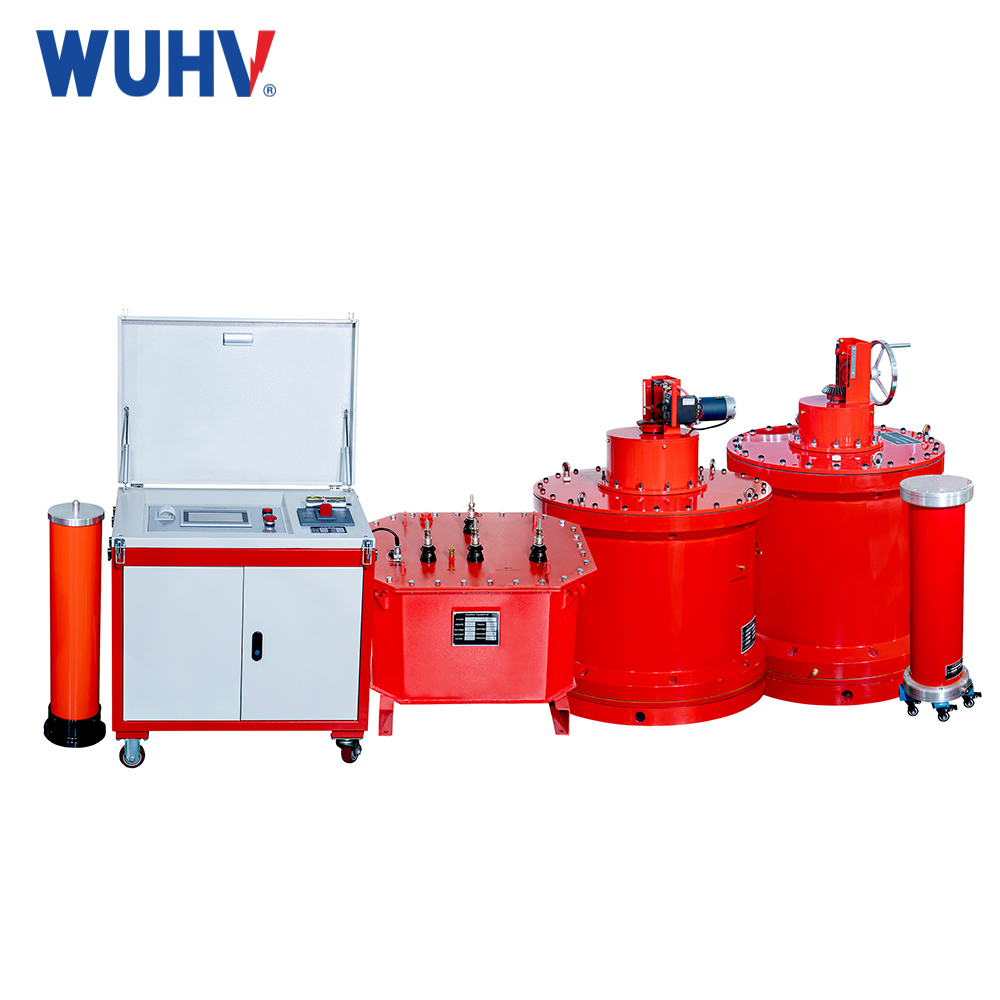
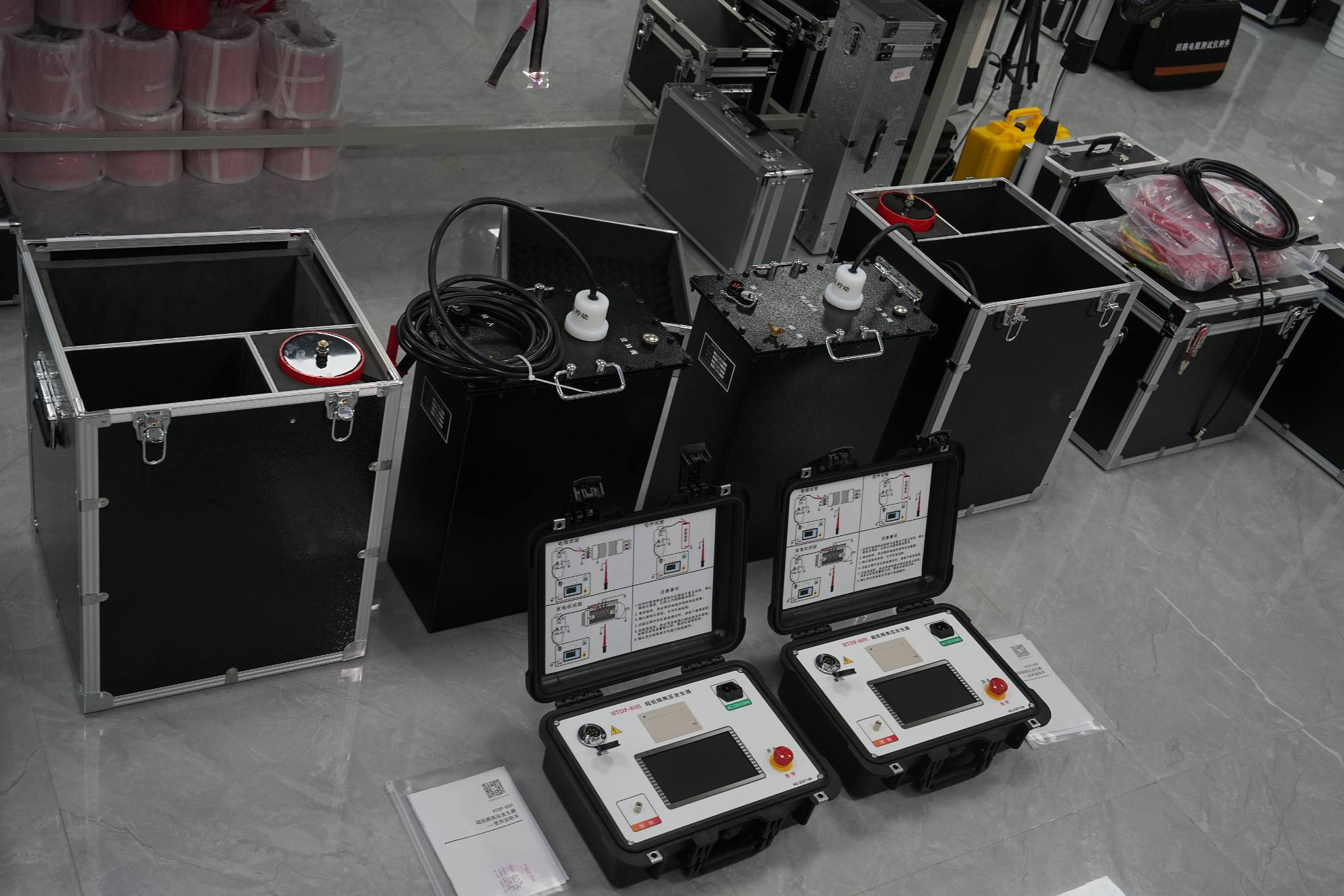
OVLF hipot tester under Wuhan UHV can help many power workers conduct various power tests more conveniently.
1. Fundamental Principles
IR Testing: Applies low-voltage DC (typically 500V–10kV) to measure leakage current and calculate insulation resistance (in MΩ or GΩ). It is a static resistance measurement, analogous to using a multimeter.
VLF Testing: Applies 0.1 Hz very low-frequency AC high voltage (2–3 times rated cable voltage, e.g., 28kV for a 10kV cable) to simulate power-frequency voltage stress, performing a dynamic withstand test + diagnostics.
2. Core Objectives
IR Testing:
Detects bulk insulation degradation (e.g., moisture ingress, contamination, major damage).
Provides the Polarization Index (PI) to assess moisture absorption trends.
VLF Testing:
Identifies latent defects (water trees, voids, interfacial aging).
Verifies cable withstand strength (whether breakdown occurs under high voltage).
Combines tan delta (tanδ) and partial discharge (PD) measurements to locate defects.
3.Safety & Applicability
IR Testing:
Inherently safe (low DC voltage doesn’t damage insulation).
Unsuitable for XLPE cable diagnostics (cannot detect water trees).
VLF Testing:
Only safe high-voltage method (0.1 Hz polarity reversal prevents space charge buildup in XLPE).
Mandated by international standards (IEEE 400.2 / GB/T 12706.4 for XLPE cables).